

Your Story Is Where Our Work Begins.

UNDERSTANDING IT IS WHERE CHANGE HAPPENS

Too many women are feeling dismissed and not heard. The woman who is "doing fine" on paper, whose exhaustion is chalked up to stress. The mother whose cyclical symptoms get waved off as part and parcel of the times. The executive who has been told her ADHD isn't "real" because she's successful.

Many are carrying the weight of perfectionism, the pressure to constantly prove to themselves, and the physical symptoms that speak what they have not been able to say aloud.

Despite their achievements, they go to bed feeling invalidated, replaying their in their heads, sleepless again.

I work with women who have spent years holding everything together while feeling internally unclear, overwhelmed, or disconnected. The systems are built on simple instruction: think, do not feel, and deliver. Feelings were cast as obstacles to outputs. Something to disconnect from in the name of optimal performance.

Meet Alecia Greenlee, MD — Women's Psychiatrist in Campbell, CA

Diagnosis matters, but it is often not the most important thing in the room. Your story is.
— Alecia Greenlee, MD

As a practicing psychiatrist, I know that emotional and relational capacities are necessities to thrive. They are the foundation of healthy families, and the bedrock of strong organizations.

My work is about helping you strengthen these capacities. To think and feel at the same time. To understand what is happening internally, not just manage what is visible externally. To act in alignment with your values.

Even when life feels overwhelming. Even when your values conflict with each other. To move through that complexity with clarity, instead of over-functioning or staying in control.

Over time, my approach has shifted. Diagnosis matters, but it is often not the most important thing in the room. Your story is. Whether you are navigating anxiety, depression, ADHD, PMDD, or other hormonal mood changes, you deserve care that slows down enough to understand you. Not just manage symptoms, but understand you clearly.

You are here because you know, even if quietly, that change is necessary and possible.

Cultivating a Different Kind of Practice
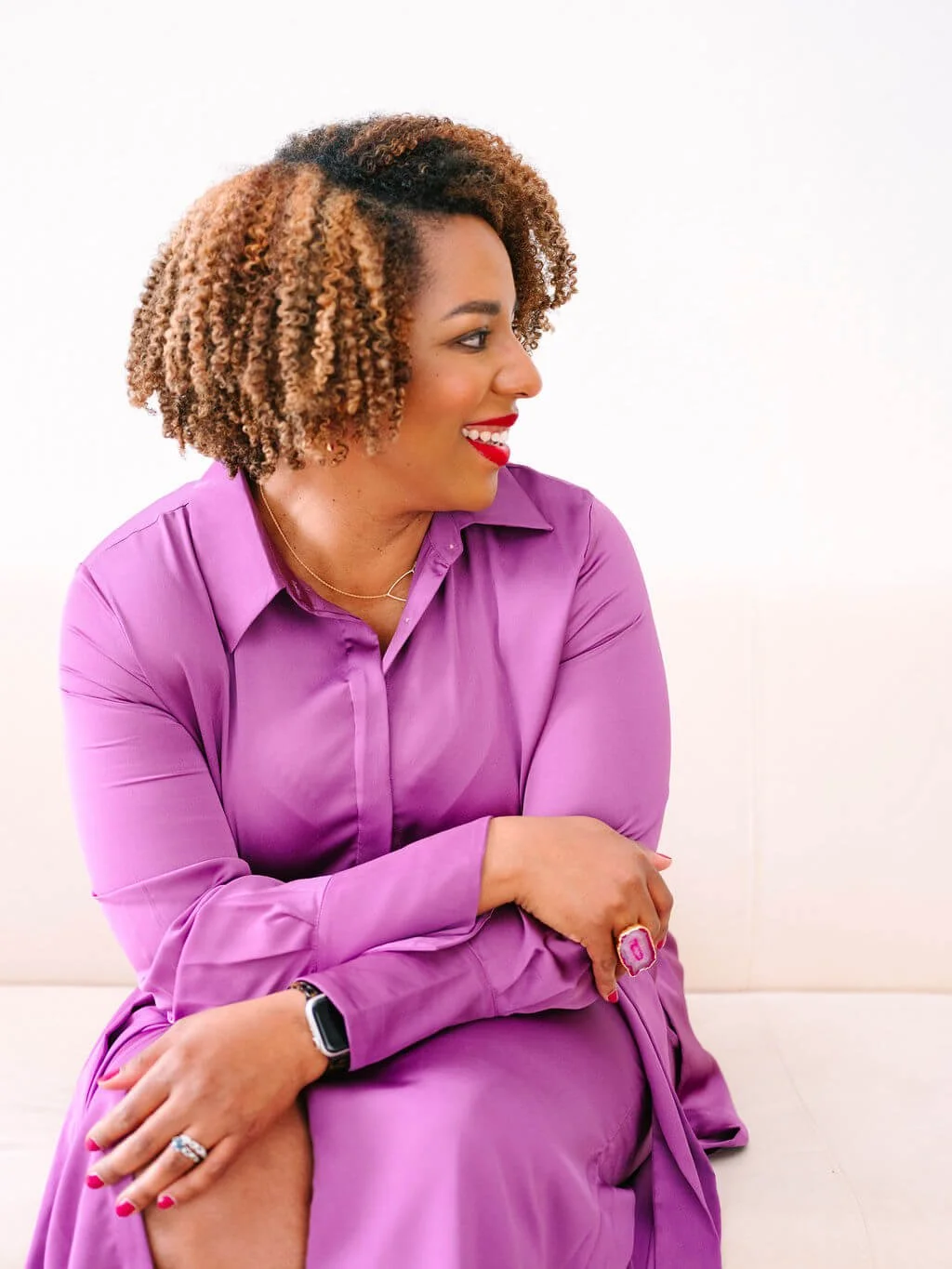
Dr. Alecia Greenlee, reproductive psychiatrist providing ADHD and perimenopause mental health support in Campbell, CA

I founded Bloom & Build Integrative Psychiatry to offer a different kind of psychiatric care. Much of medicine, including psychiatry, has been built on research that did not center women.

My fellowship and clinical focus have deepened my understanding of how reproductive hormones impact mood, how ADHD presents differently in women, and how these factors influence relationship patterns, career decisions, and sense of self.

That perspective informs my work with every patient, not only the women I treat. Care here begins with active listening and asking clarifying therapeutic questions. We include your relationships, physical health, and the systems you are navigating to garner understanding beyond a diagnosis. These details are a part of the clinical landscape.

What Working With Me Looks Like

Black Woman Psychiatrist Online in California supporting women with high functioning depression

The first appointment is extensive. Either 60 or 90 minutes, a decision we make together during our screening call based on your needs.

I want to understand how you got here, what you have tried, who you are when you are well, and the challenges that you are currently facing. We will talk about your medical history, mental health history, lifestyle, relationships, and how you are hoping I can be helpful to you.

I take notes. I think out loud. I ask questions your previous clinicians may not have asked.

Maybe you will laugh during our session. Maybe you will cry.

No matter what, you will be seen and heard.

Appointment Structure At A Glance

First visit

60 or 90 min

Decided together during our screening call

Therapy

60 min

Usually weekly or biweekly

Medication

30 to 60 min

Monthly at first, then every 1 to 3 months

After the first visit, the shape of our work depends on what we are doing together. For patients doing both therapy and medication with me, we meet for 60 minutes and fold both into the same visit.

Location

Downtown Campbell

+ telehealth across California

Insurance

Out-of-network

Superbills provided

Ready to start?

Book a screening call →

15 minutes, no cost

For current session rates and billing details, see Services + Fees →

I prescribe when prescribing is the right call, and I am honest when it is not. I often treat patients who have been medicated for years without anyone asking whether the medication is actually doing what they hoped. Part of my work is helping you evaluate that.

For some patients, therapy is part of what we do together. For others, I provide medication management while they work with a therapist elsewhere, and I collaborate with that therapist when it helps your care.

My Education & Training

  • Bachelor's Degree: California State University, Sacramento
  • Medical Degree: University of California San Francisco
  • Psychiatry Residency: Cambridge Health Alliance/Harvard Medical School
  • Master of Public Health: University of California Berkeley
  • Consultation Liaison Psychiatry & Maclean Medical Ethics Fellowships: University of Chicago
  • Family Therapy Intensive Training - Certification
  • Reproductive Integrative Fellowship - Certification
  • Academy of Consultation Liaison Psychiatry - Member
  • American College of Lifestyle Medicine - Member

Recent Conversations

Therapy on the Cutting Edge
Why we miss girls with ADHD and how hormones hold the key
Black Mental Health Matters with Dr. Kerry-Ann
ADHD in Black women

Continue Exploring

Frequently Asked Questions

Discover how our integrative approach addresses your unique mental health needs with evidence-based, culturally attuned care.

Consultation-Liaison psychiatry (C-L psychiatry) is a specialized field that bridges physical and mental healthcare, focusing on the psychological aspects of medical conditions and the medical aspects of psychiatric disorders. As part of her training at Harvard Medical School and University of Chicago, Dr. Greenlee gained extensive experience in this specialty, which now informs her integrative approach at Bloom and Build.

C-L psychiatrists work in medical settings, collaborating with healthcare teams to address the complex interplay between physical and mental health. This training is particularly valuable for understanding how chronic medical conditions, hormonal disorders, and other physical health issues impact mental wellbeing—knowledge that's especially relevant when treating women's mental health concerns.

For Black women and women of color, who often face disparities in both medical and mental health treatment, Dr. Greenlee's C-L psychiatry background enables her to:

  1. Advocate effectively within the broader healthcare system
  2. Recognize when symptoms might have undiagnosed medical causes
  3. Understand medication interactions and side effects comprehensively
  4. Provide truly integrated care that doesn't artificially separate mind and body

This expertise is particularly valuable when addressing reproductive mental health concerns, stress-related physical symptoms, and the mental health impacts of chronic conditions that disproportionately affect women of color.

Family systems theory is a therapeutic framework that views individuals as inseparable from their family networks, recognizing that family dynamics significantly influence mental health and behavior patterns. This approach is fundamental to Dr. Greenlee's practice at Bloom and Build Integrative Psychiatry, particularly when working with women navigating complex cultural and familial expectations.

The theory understands families as interconnected emotional systems where changes in one part affect the entire system. Key concepts include:

  1. Multigenerational transmission: How patterns, beliefs, and behaviors are passed down through generations—especially relevant when addressing intergenerational trauma in communities of color
  2. Emotional triangles: The tendency to involve a third person when tension exists between two people—often seen in relationship challenges
  3. Differentiation of self: Developing a healthy sense of self while maintaining meaningful family connections—particularly important for women balancing cultural expectations with personal aspirations

Family systems perspectives are valuable for understanding how cultural values, immigration experiences, and adaptation to systemic challenges shape mental health. This approach helps identify strengths and resilience factors within families while addressing patterns that may contribute to depression, anxiety, or relationship difficulties.

Cultural psychiatry is a specialized field that examines how cultural factors shape the experience, expression, and treatment of mental health conditions. At Bloom and Build Integrative Psychiatry, cultural psychiatry principles are fundamental to providing effective care for diverse clients, especially in a diverse state like California.

This approach recognizes that culture significantly influences:

  1. How symptoms are experienced and expressed: For example, depression may manifest more through physical complaints in some cultural contexts than through explicit sadness.
  2. Help-seeking behaviors: Cultural beliefs about mental health, spirituality, and community support can affect when and how individuals seek professional help.
  3. Treatment preferences and effectiveness: What works in one cultural context may not be appropriate or effective in another.

For Black women seeking mental healthcare, cultural psychiatry acknowledges the impact of unique stressors like racial trauma, microaggressions, and the "strong Black woman" schema on mental wellbeing. It also recognizes cultural strengths and resilience factors that can be leveraged in treatment.

The primary difference between a psychiatrist and a psychiatric nurse practitioner (NP) lies in their training, scope of practice, and approach to mental healthcare.

A psychiatrist like Dr. Greenlee at Bloom and Build Integrative Psychiatry is a medical doctor (MD) who completed:

  • 4 years of medical school
  • 4 years of psychiatric residency
  • Often additional fellowship training (Dr. Greenlee completed specialized training in cultural psychiatry, consultation-liaison psychiatry, and reproductive psychiatry)

This extensive medical training enables psychiatrists to:

  • Conduct comprehensive diagnostic evaluations that consider complex medical factors
  • Understand the intricate relationship between physical health and mental health
  • Treat complex and treatment-resistant conditions
  • Prescribe medication in all 50 states without supervision
  • Provide psychotherapy (though not all psychiatrists offer this)

A psychiatric nurse practitioner typically has:

  • A nursing degree plus 2-3 years of specialized psychiatric training
  • A valuable focus on holistic care and patient education
  • In some states, requirements for physician supervision or collaboration
  • The ability to prescribe medications (with varying levels of independence by state)

At Bloom and Build Integrative Psychiatry in San Jose, Dr. Greenlee's medical background is particularly valuable for addressing the complex needs of women experiencing hormonal influences on mental health, those with co-occurring medical conditions, and those requiring sophisticated medication management.

Both professionals can provide care, but their different training backgrounds make them suited for different types of cases and treatment approaches.

Yes, psychiatrists can offer therapy, though not all choose to do so. As a psychiatrist trained in multiple therapeutic modalities, Dr. Greenlee at Bloom and Build Integrative Psychiatry provides both medication management and therapy as part of her comprehensive care approach.

This integrated model offers several advantages:

  1. Seamless coordination: With one provider managing both therapy and medication (when needed), there's no risk of communication gaps between separate providers.
  2. Comprehensive understanding: Your psychiatrist develops a deeper understanding of your experiences, which informs both therapeutic interventions and medication decisions.
  3. Efficiency: Combined sessions save time and reduce the emotional labor of repeating your story to multiple providers.
  4. Holistic perspective: A psychiatrist-therapist brings medical knowledge to therapy sessions and psychological insights to medication management.

For women of color seeking mental healthcare in the Bay Area, working with a culturally attuned psychiatrist who also provides therapy can be particularly beneficial. This approach allows for treatment that addresses both biological factors and the psychological impacts of lived experiences, including racial trauma and cultural stressors, within a single therapeutic relationship.